
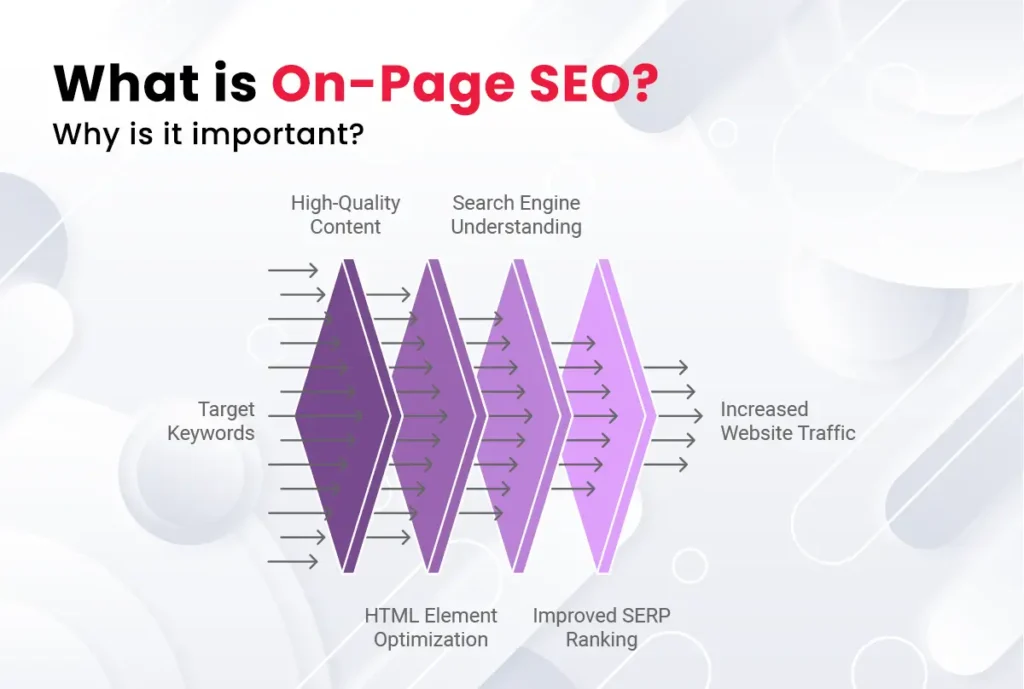
On-page SEO, also known as on-site SEO, is all about making web pages better for search engines. This way, your page might show up higher when people search online using specific search queries. It includes finding good target keywords, crafting high-quality content, and even choosing the right HTML elements for your page structure.
Its main goal is to help search engines like Google understand your web page’s main points. This understanding, achieved through a combination of on-page SEO elements like page titles and page content, gives your page a better chance to show up early in search results (SERPs). That means more people can find your site, which is great for business.
On-page SEO is vital for any serious SEO strategy. It works together with other techniques like off-page SEO to boost your website’s rank across search engines. When you optimize both the content and structure of your site’s pages using on-page SEO best practices, you could become one of the first sites people see. This can lead to more visitors to your site who are interested in what you offer.
Types of SEO covered in this guide:
Why On-Page is important for your Business?
This is where Search Engine Optimization (SEO) comes in, a strategic toolbox filled with techniques to enhance your website’s visibility. But within this toolbox lies a foundational element: on-page SEO.
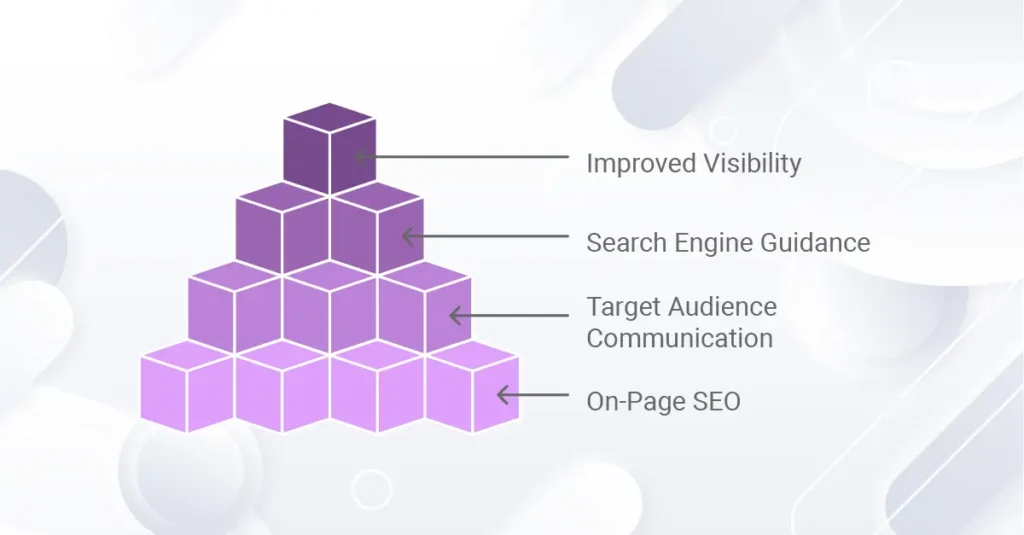
On-page SEO goes beyond simply throwing relevant keywords onto your web pages. It’s a meticulous process of optimizing the content and structure of your website to effectively communicate with search engines and, more importantly, with your target audience.
By strategically implementing on-page SEO practices, you’re essentially creating a roadmap for search engine crawlers, guiding them to understand the value and purpose of your content. There are several compelling reasons why on-page SEO deserves a prominent place in your website’s development strategy:
- Improved Search Engine Rankings: On-page optimization, the practice of optimizing elements on a website page, is pivotal for enhancing website visibility and search engine rankings. Optimizing factors like content, meta tags, and site structure, enables Google and other search engines to better understand a page’s relevance and context. Strategic use of keyword research and structured data markup boosts indexing efficiency, resulting in higher rankings in search results. This process not only increases organic traffic but also improves user experience and fosters credibility.
- Enhanced User Experience: On-page SEO plays a crucial role in enhancing the user experience by optimizing various website elements. Improvements in page load speed, mobile responsiveness, and navigation intuitiveness contribute to a smoother browsing experience. These enhancements result in prolonged visit durations, reduced bounce rates, and increased user engagement, all of which are indicators of quality content and website usability. Consequently, search engines prioritize such user-friendly websites in their rankings, reinforcing the importance of on-page SEO in not only attracting but also retaining visitors effectively.
- Increased Organic Traffic: On-page SEO, coupled with compelling, pertinent content, serves as a magnet for augmented organic traffic. By meticulously aligning content with user intent and optimizing on-page elements, websites can secure higher search engine rankings. This enhanced visibility translates to increased discoverability by potential visitors seeking relevant information or solutions. Thus, on-page SEO acts as a catalyst, driving targeted organic traffic to websites, fostering audience engagement, and amplifying online presence.
- Better Content Relevance and Quality: On-page SEO prioritizes high-quality, relevant content that fulfills user intent. This strategic approach not only improves ranking factors but also positions your website as an authority in its niche. By consistently delivering valuable content, you cultivate trust and credibility, fostering long-term user relationships and enhancing brand reputation.
- Improved Click-Through Rates (CTR): Strategic optimization of title tags, meta descriptions, and URLs enhances the attractiveness and informativeness of your search results. This leads to higher click-through rates (CTR), a signal to search engine algorithms about your page’s relevance and value. A strong CTR not only drives more traffic but also strengthens your site’s perceived importance, potentially leading to higher rankings.
- Competitive Advantage: Effective on-page SEO practices give you a competitive edge over less diligent competitors. By following a complete guide to on-page SEO, you can outrank them in search engine results pages (SERPs), capturing a larger share of organic traffic and potential customers. This strategic advantage strengthens your market position, amplifies brand visibility, and ultimately boosts your bottom line.
- Long-term Results and Cost Efficiency: Unlike paid advertising, on-page SEO delivers long-lasting benefits. Once meticulously implemented, on-page SEO initiatives sustainably propel website traffic and online visibility without ongoing costs. This makes it a remarkably cost-efficient strategy for achieving sustained growth and maintaining a competitive edge. Businesses that invest in on-page SEO cultivate a strong online presence, foster brand loyalty, and secure long-term success in their markets.
Conclusion
On-page SEO is crucial for building a strong online presence. By optimizing each page on your website with technical SEO and on-page SEO techniques, you attract more qualified visitors. On-page SEO, the practice search engine optimization (SEO) refers to, involves optimizing the on-page SEO factors of your website.
These factors are important for business because they signal to search engines what your website is about. SEO tools can help you identify on-page SEO techniques to optimize your content for relevant keywords and improve your chances of landing on the first page of search results.
Essentially, on-page SEO focuses on optimizing the content of the page itself. This includes elements like title tags, meta descriptions, headings, and the content on the page. An on-page SEO checklist can help ensure you’re covering all the bases. On-page optimization techniques go beyond keywords, considering user experience and SEO. Every page on your website should be optimized to provide a positive user experience.
While on-page SEO is essential, remember off-site SEO (factors like backlinks) also plays a role. The goal is to optimize your website for the topic of your page, providing a clear and concise brief summary of the page through content on the page and technical SEO.
While there are advanced SEO tactics, even basic on-page SEO can help your business grow online. On-page search engine optimization ensures search engines understand the content of your page and what on-page SEO means.
Remember to optimize important pages on your website using both on-page and off-page SEO. This includes optimizing links on your website to ensure a strong internal linking structure. By focusing on web page content, linking, and user experience, you can use on-page SEO to make your website more discoverable and achieve SEO success.