SEO, or search engine optimization, is the practice of fine-tuning multiple ranking elements on a website so search engines such as Google, Microsoft Bing, and Yahoo can efficiently crawl the site and rank it higher in SERP results, thanks to its superior quality.

The main goal of SEO is to place a website at a higher search rank to attract more organic visitors to consequently drive more conversions, leads & develop a loyal audience.

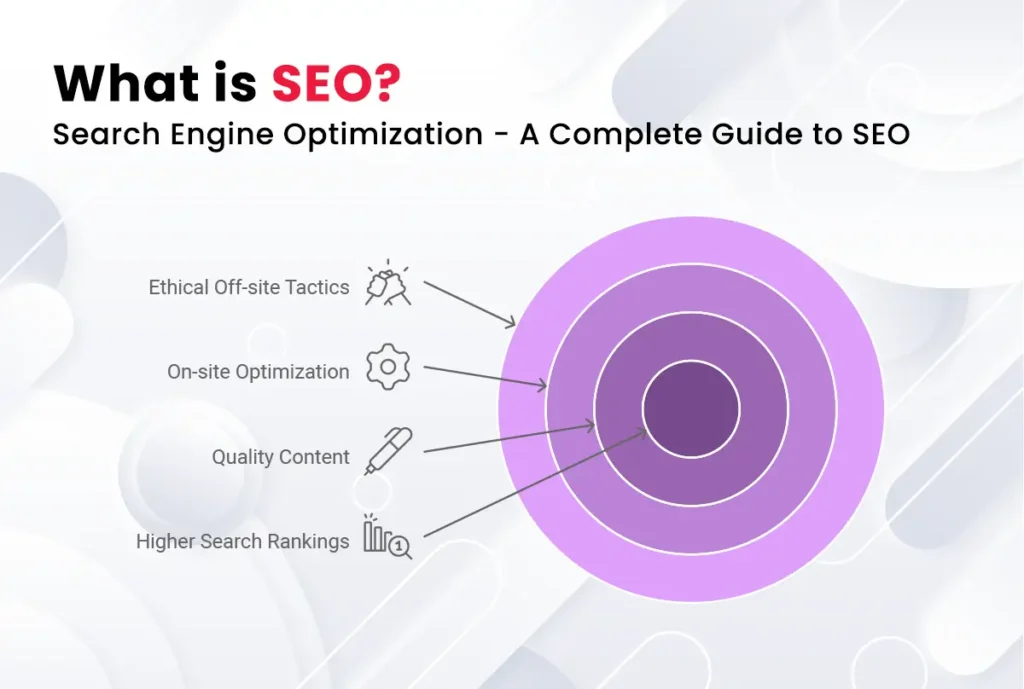
SEO isn’t about using black hat methods to get to the top of search results. Infact that type of work will set you for failure in the long term. It’s actually about quality content, refining on-site details, and using ethical off-site tactics.
Types of SEO covered in this guide:

Why SEO Is Important

Nearly half of website traffic comes from organic traffic through searches in SERPs, a fact that cannot be ignored as people usually start their journey with a search. 

More so, companies around the world spend more than $79 billion on SEO services. If you’re not part of this figure? Then you’re sorely missing out. 

The SEO Industry brings in measurable results that have been well-documented for brands, businesses, and big corporate organizations alike. 

  • Improving visibility and ranking higher in search results can boost your business.
  • SEO is crucial because search engine results pages are competitive and filled with features like knowledge panels and videos.
  • Good SEO work is sustainable compared to other marketing channels like paid campaigns or social media.
  • SEO is the foundation of holistic marketing and helps achieve key business goals while trust with users.

building Although Google earned $279.8 billion mainly from ads in 2022, organic searches don’t directly add to its revenue. However, they offer businesses a chance to shine through high-quality content and effective SEO. Given the trillions of searches conducted each year, it’s vital for businesses to use SEO to draw in traffic.

Which SEO Rankng Factors Should You Focus On?

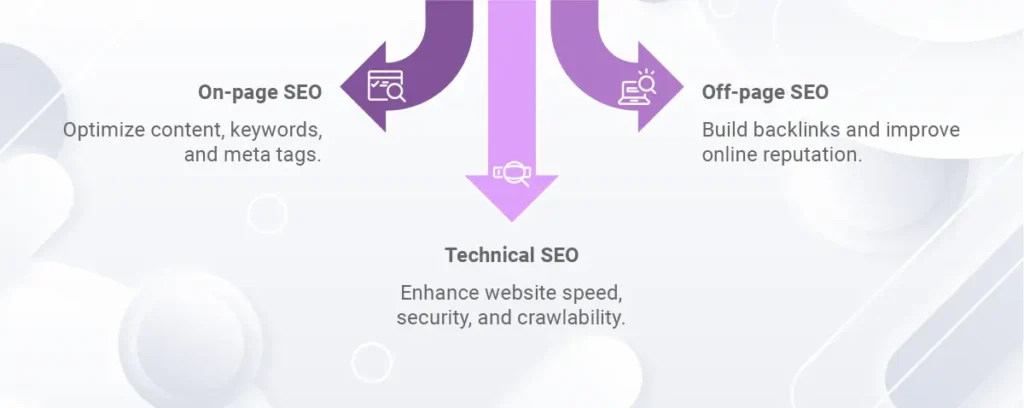
Understanding ranking factors and the mechanics of search engines is essential for effective SEO. While Gvoogle’s algorithms take into account over 200 factors to rank pages, there’s no need to panic. The good news is that only a handful of these factors are truly significant. These factors fall into three main categories, and we’ve written beginner guides to give you a head start:

  • On-page SEO
  • Off-page SEO
  • Technical SEO

How Search Engines Work?

Getting how search engines work is key to doing “good” SEO.  Search engines go through a three step process:
  • Crawling
  • Indexing
  • Ranking
Through this they find and show the top pages based on a search query. These stages are crucial to help find content and make sure users see the right pages.

Crawling

Search engines use bots like Googlebot to crawl the web. They look through countless pages to find new and updated info. By following links, these bots discover new content to add to the search engine’s database.

Indexing

Found pages go into a huge index. This index keeps URLs and important details like keywords and user activity. Indexing organizes the web, making it easy to search. Google’s index has hundreds of billions of web pages from Googlebot’s crawls.

Ranking

The next stage is sorting the pages by relevance. Search engines rank pages to quickly meet user searches. They look at things like where you are, your language, and what device you’re using. This ensures each search shows the best results for you.

Advantages of SEO

Search engine optimization (SEO) has many advantages for businesses and websites. But, it also faces some tough challenges. Let’s explore the ups and downs of SEO as a digital marketing tactic.

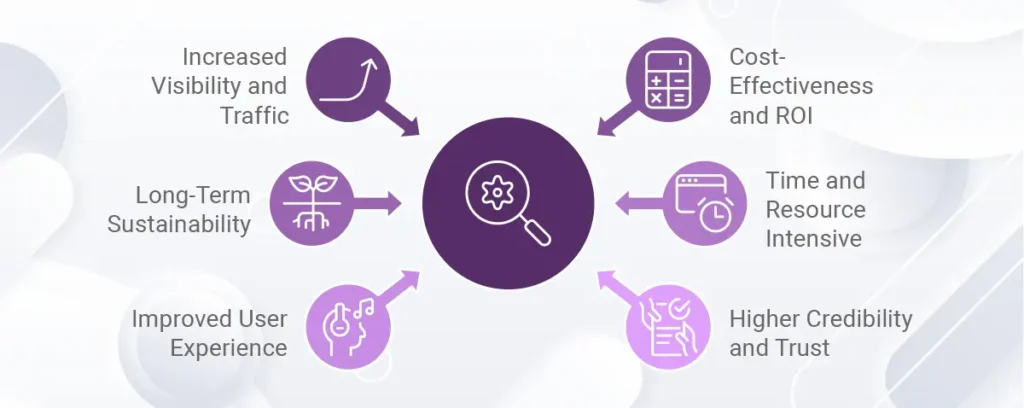
Increased Visibility and Traffic

A big plus of SEO is how it can make your site more visible online. It uses keywords to help your site rank higher in search results. This means more people can find your business online especially because organic searches bring in over half of website traffic.

Keywords are words or phrases people type in search engines to find the information they are looking for.

The targeted traffic “good” SEO brings is high quality, which means more leads and sales over time. SEO helps grow your traffic and conversions, raising your search ranking and market authority online. That’s how we helped Reveal Medical Center get an amazing 289% increase in organic traffic in just 2 months! With Google holding 83% of the search market, making content that serves users and search engines is vital for SEO success.

Cost-Effectiveness and ROI

Compared to paid ads, SEO is a cost-friendly way to get visitors and leads. Once you’ve put the work in, traffic from search engines doesn’t cost much.  Infact according to google themselves the ROI on organic search traffic from Google is 5.3X, compared to 2X from paid search! Organic search drives 53% of website traffic, while paid search drives only 27%.

PPC ads can rack up costs fairly quickly depending on your industry and competition for the keyword you choose to target. 

More surprising is that 80% of users scroll past Google-sponsored ads.

So while paid advertising can generate immediate results, a good SEO campaign is a much better long-term investment for organic growth.

Long-Term Sustainability

SEO keeps working for you even if you stop for a while. If you keep improving your site and content, your rankings can climb and bring in more people. This steady growth can keep bringing you new business without more spending.

Time and Resource Intensive

SEO isn’t easy or quick. It demands lots of time and hard work, from choosing the right keywords to fixing your site’s technical details. This might be tough if your business is small or has limited resources. Plus, the real benefits might take a while to show.

Improved User Experience

SEO involves optimizing site structure, speed, and content, enhancing overall user experience. A well-optimized site is easier to navigate, loads faster, and provides valuable content to users.

Higher Credibility and Trust

Websites that rank higher in search results are often perceived as more credible and trustworthy by users. Being on the first page of search results can significantly boost your brand’s reputation.

Ranking Dunk Burgerz #1 for “Smash Burgers in Luton” on google search greatly helped them increase their credibility and conversions.

Competitive Advantage
A well-optimized site can outperform competitors in search rankings, capturing a larger share of potential customers. Staying ahead of competitors in search results can lead to increased market share and revenue. It’s crucial to have realistic expectations and understand that SEO is a marathon, not a sprint. Consistent effort and patience are key to achieving long-term success.

Disadvantages of SEO

Algorithm Updates and Volatility

Search engine rules keep changing, and SEO must change with them. Big updates can shake up rankings, which means you have to stay alert and update your strategy.

Keeping up with
SEO best practices is essential to keep your site visible. Core updates can infact result in devastating effects on your SEO efforts. After the March 2024 Google core update 837 websites were completely deindexed resulting in a loss of $446,552 in monthly ad revenue! And many others have experienced have completely lost their rankings and organic traffic. 

You should aim to follow Googles E.E.A.T guidelines to ensure you stay clear of being hit by a core update.

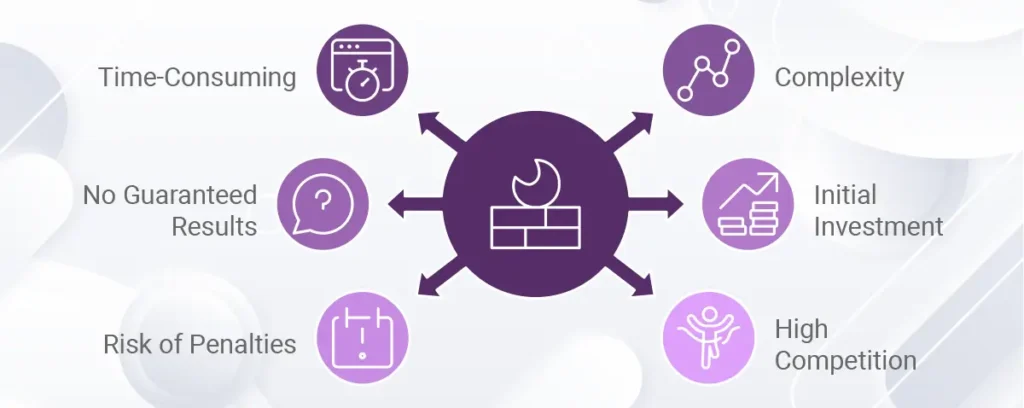
Time-Consuming

SEO is a long-term process that requires ongoing effort and patience to see significant results. It can take several months to achieve noticeable improvements in rankings and traffic. In general you can expect to see minimal results in the first three months and gradual returns on investment after a period of 6 months with exponential ROI after 12 months of running a good SEO campaign.

SEO is a huge time and capital investment. Want to avoid waiting months only to find you’ve gotten nowhere? With over 12+ years of experience delivering expert SEO services backed by measurable results, Cranberry Marketing is a top choice to take your businesses digital presence to the next level. Get in touch today for a FREE consultation.

Complexity

SEO involves understanding and implementing a wide range of techniques and staying updated with search engine algorithm changes. It requires a deep knowledge of various factors, including keyword research, link building, and technical SEO.

No Guaranteed Results

Despite best efforts, there are no guarantees of achieving top rankings due to constant algorithm updates and competition. Search engines continually refine their algorithms, which can impact your site’s performance unpredictably.

Don’t be misled by SEO experts who claim they can guarantee you the #1 ranking. There are no foolproof tricks to achieve this. Black hat methods will only result in violations of Google’s spam policies. While these tactics might bring short-term results, they will eventually be penalized during major core updates.

Initial Investment

Although cost-effective over time, SEO may require an initial investment in tools, resources, and expertise. Hiring an SEO expert or investing in quality content and technical improvements can be costly. 

At Cranberry Marketing we aim to provide affordable SEO services for small businesses without breaking the bank.

Risk of Penalties

Poor SEO practices or violations of search engine guidelines can lead to penalties, negatively impacting rankings and visibility. Recovery from such penalties can be difficult, time-consuming and sometimes near impossible.

High Competition

The competitive nature of SEO means that even with optimization, it can be challenging to outrank established competitors, especially in saturated markets. Highly competitive keywords may require significant effort and resources to achieve high rankings.

SEO Tools and Resources

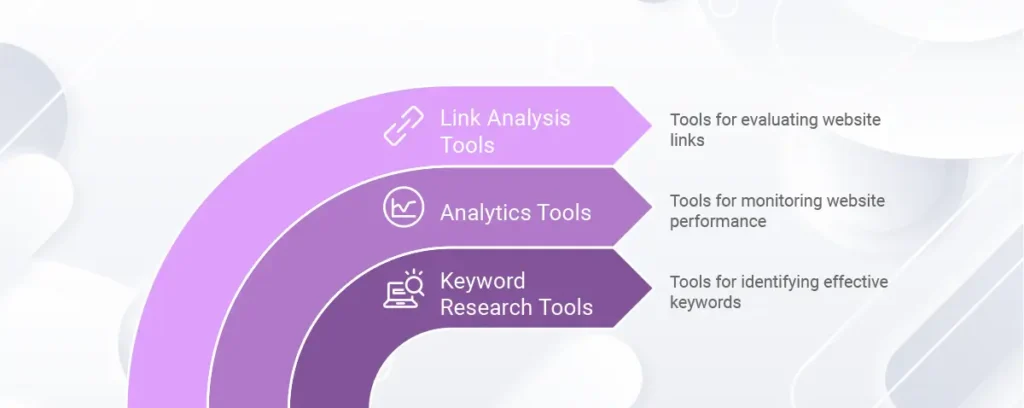
Choosing the right SEO tools is key for a good SEO strategy. They help with finding the right keywords. They also make it easier to check how a site is doing and understand its links. This makes tracking your SEO progress much simpler.

Keyword Research Tools

Finding the right keywords is step one in SEO. Google Ads Keyword Planner shows how often people search for these keywords and the best part is that it’s free. AnswerThePublic and AlsoAsked give you keyword ideas based on what people are asking online.  If you need to come up with keywords in a natural way, Neural Text starts at $19 a month.

Analytics Tools

To track your SEO success, you need good analytics tools. Google Search Console is a free tool by Google themselves that lets you see your site the way Google does.  Screaming Frog is great for deep looks at your site’s SEO health, checking how well it’s being found and indexed.  Google Trends helps you find what’s popular in your area, helping you plan your content.

Link Analysis Tools

Knowing about your links is important for SEO. Ahrefs and Semrush are top choices for analyzing links and figuring out how to get more.  They have plans for all sizes of businesses, from small to large. Also, Moz offers free guides to learn more about SEO and building links.

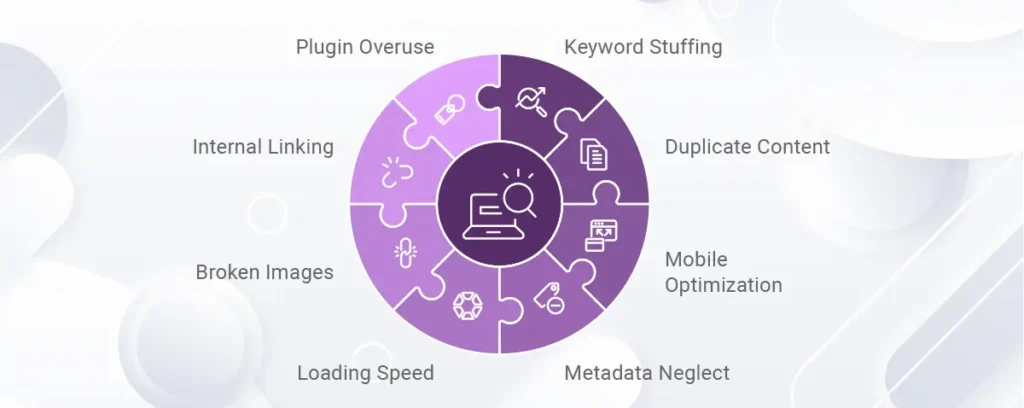
Common SEO Mistakes to Avoid.

1. Avoid Keyword Stuffing Keyword stuffing is a significant SEO mistake. It involves overloading a webpage with keywords in an attempt to trick search engines, which can lead to penalties and lower rankings.
2. Eliminate Duplicate Content Having duplicate content is another common error that negatively impacts your page ranking. Keeping your content unique is crucial for building trust and maintaining a strong SEO presence.
3. Optimize for Mobile Users Not optimizing for mobile users can drive away a substantial amount of traffic since many people use mobile devices for searching. With Google’s shift to mobile-first indexing, a website’s mobile version is now crucial for its ranking.
4. Don’t Neglect Metadata Forgetting to optimize metadata, such as page titles and meta descriptions, is another mistake. These elements help improve your Click Through Rate (CTR) and search rankings, making them essential for effective SEO.
5. Ensure Fast Loading Speeds A slow website can harm your SEO, as it may cause visitors to leave your site quickly. Using tools like Google PageSpeed Insights can help you improve your site’s speed and retain visitors.
6. Fix Broken Images and Use Alt Tags Broken images or missing alt tags can lower your on-page SEO. Ensuring that all images load correctly and have descriptive alt tags enhances your site’s accessibility and SEO.
7. Implement Internal Linking Not using internal links can harm your site’s structure and reduce visitor retention. Internal links help visitors navigate your site more easily and improve your SEO.
8. Limit Plugin Usage Relying too much on plugins, especially on WordPress, can slow down your website. It’s best to use them sparingly to maintain optimal site performance and speed.
9. Avoid Black Hat SEO Tactics Using Black Hat SEO methods to game search rankings is a major mistake. These unethical tactics can destroy a site’s reputation and lead to severe penalties from search engines.
10. Regularly Update Your Content Not updating content can damage your site’s authority, waste crawl budget, and increase bounce rates. Keeping your content fresh and up-to-date is essential for maintaining a strong SEO presence and retaining visitors.
SEO Metrics and Measuring Success

To measure the success of your SEO efforts, it’s key to keep an eye on certain metrics. These metrics give you valuable information on how your website is doing. They also help you figure out what changes might be needed. Let’s look at some crucial SEO metrics you need to track.

Organic Traffic

Organic traffic shows how many visitors reach your website through free search results. It tells you how good your site is at drawing in people looking for what you offer. This helps you see how well your SEO is working. By tracking visitors from specific keywords, you can see which ones get people to your site. You’ll understand how your place in search results affects your site’s traffic.

Conversion Rates

It’s not just about getting visitors, but also about turning them into leads or customers. Conversion rates show how many visitors do things like sign up or buy something. Knowing your conversion rates can make your ROI clearer. It shows which SEO tactics are actually profitable. Keeping an eye on conversions makes sure your marketing matches your business goals. It also helps you make changes to get better results.

Keyword Rankings

Watching your keyword rankings is essential. Checking your chosen keywords often lets you see how your site competes. It gives you a direct look at how visible your site is in search results.

Higher keyword rankings usually mean more visitors, which boosts your site’s performance. Looking at domain authority can also tell you a lot. It shows how often your site appears in search results, giving more insight into your efforts and visibility.

By keeping track of organic traffic, conversion rates, and keyword rankings, you can keep improving your SEO. Continuous improvement keeps you ahead of the competition. It ensures your website stays noticeable and appealing in searches.

FAQ
SEO, or Search Engine Optimization, is a method to boost your website’s visibility in search results. This makes it easier for potential customers to find you. To do this, you optimize various aspects of your website. This includes making changes to suit search engine guidelines, increasing visibility, and improving the experience for visitors.
SEO is key to making your website more visible online. By making your website appear higher in search results, more people can find you. SEO connects you with users looking for what you offer. This helps you attract organic traffic, which builds trust and authority online.
SEO brings targeted traffic by making your website more relevant to your audience’s searches. By using the right keywords and creating quality content, your site meets users’ needs. This way, search engines can match your site with the right audience looking for what you offer.
SEO can attract traffic without ongoing costs, unlike paid ads. Once your site is optimized, it keeps drawing in visitors for free. Over time, this results in a better return on investment. It creates sustainable traffic and authority.
Search engines like Google use bots to scan the internet, discovering and reviewing content. They follow links to find and assess new or updated pages. These pages are then indexed, and organized by keywords and data. When someone searches, the search engine ranks pages that match the query best.
Google’s Page Experience Update evaluates how easy and pleasant it is to use a web page. It looks at things like how quickly a page loads, if it works well on phones, and if it’s secure. Websites that offer a great experience can rank higher because of this update.
Avoid SEO mistakes like overusing keywords, duplicating content, and using dishonest tactics to try to improve rankings. Staying away from these errors helps keep your SEO strategy strong and effective.
On-page SEO focuses on improving your website’s pages by enhancing content, using keywords, and using meta tags. Off-page SEO aims to increase your site’s authority by getting links from reputable sites. These strategies help your site rank higher in search results.
Technical SEO is essential for allowing search engine bots to easily access, crawl, and index your site. It includes making your site’s structure better, improving loading speeds, and ensuring your site works well on mobile devices. All these efforts lead to better search rankings.
To optimize content, create engaging, original material that fulfills user needs and includes keywords. Organize your content well and keep it engaging and informative. Regular updates can boost your page’s ranking chances.
Link building means getting links from other trusted sites to yours. A good set of backlinks boosts your site’s reputation and helps with search engine rankings. This can lead to more organic traffic.
For SEO, tools for researching keywords, analyzing backlinks, and tracking website performance are very helpful. They help find valuable keywords, assess your site’s health, and tweak your strategy for better optimization.
Local SEO helps your business show up in local searches. This involves using local keywords, claiming a Google My Business listing, and ensuring your information is consistent across directories. It attracts local customers and leads to your site.
Measure SEO success by tracking organic traffic, conversion rates, and how well keywords rank. These metrics show how well your site performs in search results and how well it attracts and converts visitors. They indicate where you might need to improve.
Need help with your website?
At Cranberry Marketing we offer SEO services that deliver results backed by numbers, we’ve helped over 400+ clients in SEO, marketing, branding, and web design & development to boost their online presence.

Leave a Reply

Your email address will not be published. Required fields are marked *

Need Help? Chat With Us.